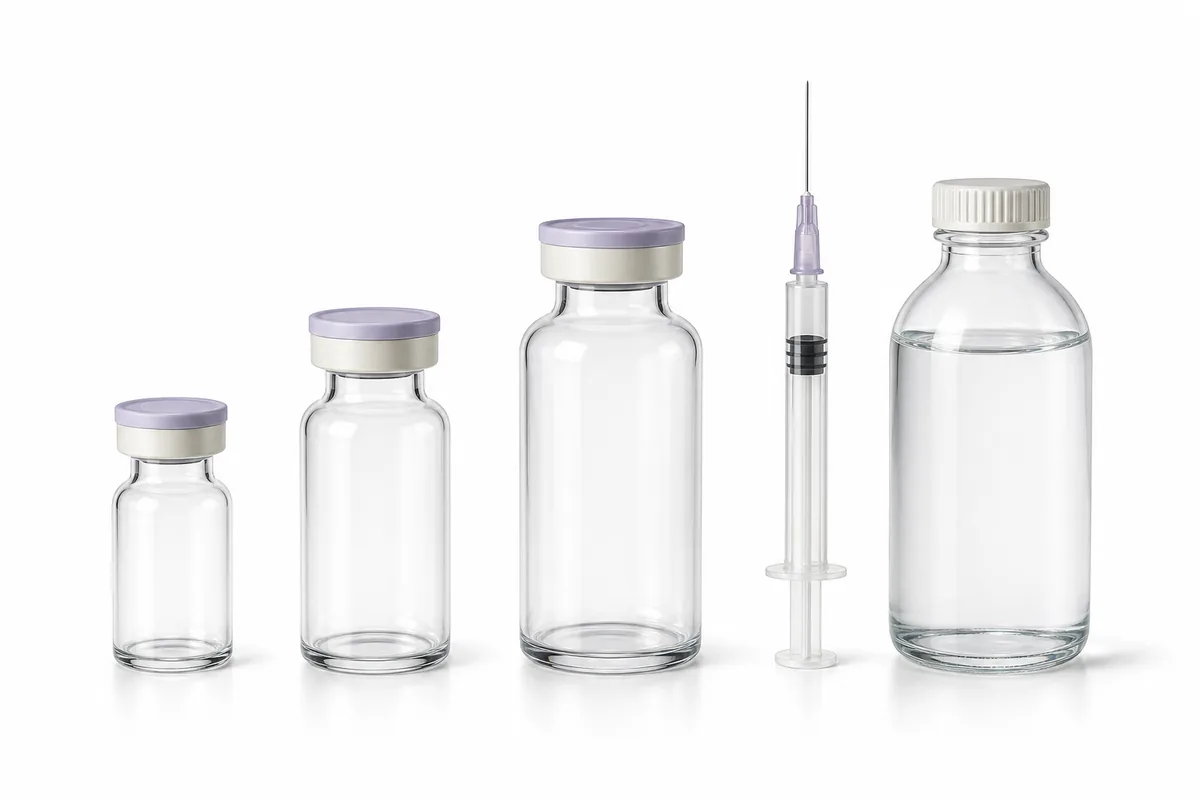
TL;DR: Concentration (mg/mL) = vial mg ÷ mL of bacteriostatic water. On a U-100 insulin syringe, 1 unit = 0.01 mL, so dose (mg) = concentration (mg/mL) × volume drawn (mL). A 30 mg retatrutide vial in 3 mL of BAC water is 10 mg/mL, so a 6 mg draw is 0.6 mL, which reads as 60 units. The trap: a U-100 syringe only holds 100 units (1 mL) total, and dilute high-dose vials can push a single draw well past that line.
Search interest in “how much bac water for 30mg retatrutide” has jumped more than 3,300% recently, and it is easy to see why. Retatrutide vials now ship in 10 mg, 30 mg, and even 40 mg sizes — unfamiliar territory if the only reconstitution math you have done was on a 5 mg or 10 mg vial. The formula does not change, but the numbers get bigger, and that is exactly where people make mistakes. This walks through the general formula, then applies it to every common vial-and-water combination so you can read any label correctly.
The formula, stated once
Every reconstitution question — for any peptide, any vial size — reduces to the same two-step arithmetic chain.
Step 1 — concentration:
Concentration (mg/mL) = vial mass (mg) ÷ bacteriostatic water added (mL)
Step 2 — dose to volume, volume to units:
Dose (mg) = concentration (mg/mL) × volume drawn (mL), and since a U-100 syringe reads 1 unit = 0.01 mL, units = (dose ÷ concentration) × 100
That’s the whole system. Water volume never changes how much retatrutide is in the vial — it only changes how that fixed mass is spread across volume, which changes how many syringe units a given milligram dose reads as. If this feels new, our general BAC water ratio guide and the mcg-to-units walkthrough build the same logic from the ground up on smaller vials.
Why retatrutide vials come in 10 mg, 30 mg and 40 mg sizes
A 5 mg or 10 mg vial made sense when research doses were small. It stops making sense once the target dose is large, because a vial can never deliver more milligrams than it physically contains — no dilution creates peptide that isn’t there. That is the mechanical reason 30 mg and 40 mg vials exist at all.
Retatrutide’s own trial history explains why the target crept up. Phase 2 tested targets up to 12 mg weekly, and the phase 3 TRIUMPH-1 trial confirmed the same ceiling at longer duration, with the 12 mg arm posting the largest weight reduction of the doses studied. A 10 mg vial cannot supply a 12 mg dose in a single draw under any reconstitution — there is only 10 mg of peptide in the glass, period. Our retatrutide dosing and titration article covers how that ladder was actually structured in trials, and what retatrutide is covers the mechanism behind why the ceiling sits where it does. Larger vials exist purely to make the higher end of that range physically drawable.
Worked tables: every vial, every common water volume
The tables below apply the two-step formula to 10 mg, 30 mg, and 40 mg vials, each reconstituted with 1 mL, 2 mL, 3 mL, or 5 mL of BAC water, and read off the syringe units needed for five common research doses: 2 mg, 4 mg, 6 mg, 9 mg, and 12 mg. Every cell was computed directly from the formula above and cross-checked twice. Values marked † exceed the 100-unit capacity of a single U-100 syringe.
10 mg vial
| BAC water | Concentration | 2 mg | 4 mg | 6 mg | 9 mg | 12 mg |
|---|---|---|---|---|---|---|
| 1 mL | 10 mg/mL | 20 units | 40 units | 60 units | 90 units | — |
| 2 mL | 5 mg/mL | 40 units | 80 units | 120 units † | 180 units † | — |
| 3 mL | 3.33 mg/mL | 60 units | 120 units † | 180 units † | 270 units † | — |
| 5 mL | 2 mg/mL | 100 units (exactly full) | 200 units † | 300 units † | 450 units † | — |
The 12 mg column is marked ”—” for a simple reason: a 10 mg vial only ever contains 10 mg of peptide, so a 12 mg single draw is not possible at any dilution. Even the 9 mg column, while arithmetically valid, means pulling nine-tenths of the entire vial’s contents into one draw — worth noticing before you commit to a dilution.
30 mg vial
| BAC water | Concentration | 2 mg | 4 mg | 6 mg | 9 mg | 12 mg |
|---|---|---|---|---|---|---|
| 1 mL | 30 mg/mL | 6.67 units | 13.33 units | 20 units | 30 units | 40 units |
| 2 mL | 15 mg/mL | 13.33 units | 26.67 units | 40 units | 60 units | 80 units |
| 3 mL | 10 mg/mL | 20 units | 40 units | 60 units | 90 units | 120 units † |
| 5 mL | 6 mg/mL | 33.33 units | 66.67 units | 100 units (exactly full) | 150 units † | 200 units † |
Check the 3 mL row against the formula by hand: 30 mg in 3 mL is 10 mg/mL, and a 6 mg dose at 10 mg/mL is 0.6 mL, which is 60 units. The 12 mg cell in that same row is 1.2 mL — 120 units — already over the line.
40 mg vial
| BAC water | Concentration | 2 mg | 4 mg | 6 mg | 9 mg | 12 mg |
|---|---|---|---|---|---|---|
| 1 mL | 40 mg/mL | 5 units | 10 units | 15 units | 22.5 units | 30 units |
| 2 mL | 20 mg/mL | 10 units | 20 units | 30 units | 45 units | 60 units |
| 3 mL | 13.33 mg/mL | 15 units | 30 units | 45 units | 67.5 units | 90 units |
| 5 mL | 8 mg/mL | 25 units | 50 units | 75 units | 112.5 units † | 150 units † |
Another hand check: 40 mg in 2 mL is 20 mg/mL, and a 12 mg dose at 20 mg/mL is 0.6 mL — 60 units. Same shape as the 30 mg example above, just scaled to a bigger vial.
30 mg ÷ 3 mL = 10 mg/mL. A 6 mg dose is 0.6 mL, which reads as 60 units on a U-100 syringe.
The over-100-units trap
This is the practical reason “how much bac water for 30mg retatrutide” is such a common search. A U-100 insulin syringe is calibrated for exactly 100 units per barrel — 1 mL, full stop. Nothing stops the arithmetic from producing a number larger than that, but the syringe cannot hold it. Look back at the tables: every 5 mL row for every vial size eventually pushes a common dose past 100 units, and the 10 mg vial hits that ceiling almost immediately.
More BAC water lowers concentration, so the same 6 mg dose needs a larger and larger draw — until it no longer fits a single U-100 syringe.
Mixing mechanics, briefly
The arithmetic is the hard part; the handling is simple and the same across every vial size. Add the BAC water slowly, aiming the needle at the inner glass wall rather than straight down onto the powder, and let it run down gently. Swirl or roll the vial to dissolve the cake — do not shake it, since agitation can drive aggregation and produces foam that makes an accurate draw harder to read. Once dissolved, store the vial refrigerated at 2-8°C. Our reconstitution and BAC water guide covers the technique and the evidence behind it in more depth.
Picking a water volume that keeps the math clean
Choosing your BAC water volume so your typical research amount lands on a whole number of units saves you from reading between syringe marks every time. Scan the tables above for the row where your intended dose produces a clean, under-100 unit count, rather than reconstituting first and discovering the number afterward. For a 40 mg vial across a 4-12 mg dose range, 2 mL keeps every value clean and under 100. For a 30 mg vial, 1 mL or 2 mL both stay under the ceiling with tidy numbers; 3 mL only works cleanly up to 9 mg. The general principle from peptide dosing 101 applies here too — the concentration you choose during reconstitution is a decision you make once, and it determines how easy every future draw is.
Frequently asked questions
How much BAC water do I use for a 30 mg retatrutide vial?
It depends on the concentration you want, since there is no single mandatory volume. 1 mL gives 30 mg/mL, 2 mL gives 15 mg/mL, 3 mL gives 10 mg/mL, and 5 mL gives 6 mg/mL. Pick the volume where your intended dose lands on a clean unit count under 100 — for example, 3 mL puts a 6 mg dose at exactly 60 units.
How much BAC water do I use for a 40 mg retatrutide vial?
Same formula, bigger vial: 1 mL gives 40 mg/mL, 2 mL gives 20 mg/mL, 3 mL gives 13.33 mg/mL, and 5 mL gives 8 mg/mL. At 2 mL, a 12 mg dose works out to exactly 60 units, which is why 2 mL is a common, math-friendly choice for this vial size.
Why can’t a 10 mg retatrutide vial deliver a 12 mg dose?
Because dilution only changes concentration, never total mass. A 10 mg vial contains exactly 10 mg of peptide no matter how much BAC water you add, so a 12 mg single draw is not possible at any dilution. This is exactly why 30 mg and 40 mg vials exist — to physically contain enough peptide for the higher end of the dose range studied in trials.
What happens if my calculated draw is over 100 units?
It means that draw does not fit a single U-100 syringe, since 100 units equals the full 1 mL barrel. This happens most with dilute reconstitutions of high-dose vials — a 10 mg vial in 5 mL of water needs 200 units for a 4 mg dose, double a syringe’s capacity. The fix is reconstituting with less water so concentration rises and the same dose reads as fewer units.
Does more BAC water change how much retatrutide is in the vial?
No. The total peptide mass is fixed at the amount printed on the vial label. Adding more water only lowers the concentration, spreading that same fixed mass across a larger volume, which means a larger number of units for any given milligram dose. Less water does the opposite — higher concentration, fewer units per dose.
Does reconstituted retatrutide need to be refrigerated?
Yes. Once dissolved, store the vial at 2-8°C and keep it away from light. Lyophilized powder is comparatively stable; the reconstituted solution is not, so refrigeration promptly after mixing is standard practice across peptide handling generally, not specific to retatrutide.
This article is an educational reference on reconstitution arithmetic for research-use-only contexts. It does not recommend a dose; it teaches the formula so any vial label can be read correctly.