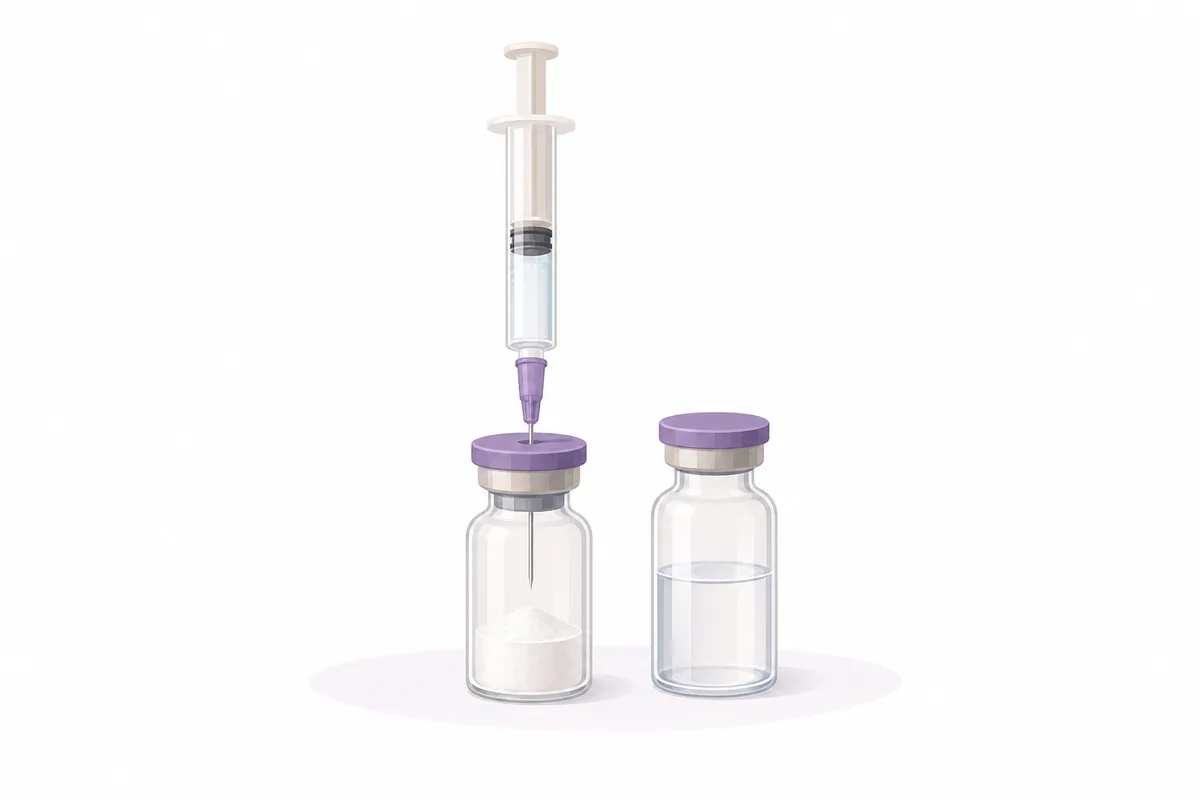
TL;DR: To reconstitute a peptide, sterilize the stoppers, draw bacteriostatic water into a syringe, inject it slowly down the vial’s glass wall without spraying the powder, let it dissolve without shaking, then refrigerate at 2-8°C — properly reconstituted peptides typically remain stable for 4-6 weeks.
Proper peptide reconstitution is crucial for maintaining peptide stability and ensuring accurate dosing in research settings. This guide covers everything you need to know to get started. If you’re new to peptide research more broadly, our beginner’s guide to peptide research covers the foundational concepts before you start reconstituting.
What is Reconstitution?
Reconstitution is the process of dissolving lyophilized (freeze-dried) peptide powder back into a liquid solution. Peptides are shipped as powder because:
- Longer shelf life in powder form
- Better stability during shipping
- Easier to store long-term
Common research peptides that require reconstitution include BPC-157 and TB-500, both of which are compared in detail in our BPC-157 vs TB-500 comparison.
Choosing Your Solvent
Bacteriostatic Water (BAC Water)
Recommended for most peptides
- Contains 0.9% benzyl alcohol as preservative
- Allows multiple draws from same vial
- Extends reconstituted stability to 4-6 weeks
- Most common choice for research peptides
Sterile Water
For single-use preparations
- No preservatives
- Must be used within 24-48 hours
- Higher contamination risk with multiple draws
Comparison Table
| Factor | BAC Water | Sterile Water |
|---|---|---|
| Preservative | Yes (0.9% BA) | No |
| Multi-use | Yes | No |
| Stability | 4-6 weeks | 24-48 hours |
| Cost | Moderate | Lower |
Refrigerated at 2-8°C. Benzyl alcohol in BAC water extends the usable window dramatically.
Required Materials
Before starting, gather:
- Peptide vial - Lyophilized powder
- BAC water - Or sterile water
- Syringes - For drawing and injecting water
- Alcohol swabs - For sterilization
- Sharps container - For needle disposal
Once your peptide is reconstituted, proper injection technique matters just as much as reconstitution itself — see our injection best practices guide for sterile handling and site rotation tips.
Step-by-Step Reconstitution
Step 1: Preparation
- Clean workspace thoroughly
- Wash hands with soap and water
- Allow peptide vial to reach room temperature
- Gather all materials
Step 2: Sterilize
- Wipe peptide vial stopper with alcohol swab
- Wipe BAC water vial stopper with alcohol swab
- Allow to air dry (30 seconds)
Step 3: Draw Water
- Using a sterile syringe, draw desired amount of BAC water
- Common volumes: 1mL, 2mL, or 2.5mL
Step 4: Add Water to Peptide
Critical technique:
- Insert needle through rubber stopper
- Aim toward the glass wall of the vial
- Inject water slowly down the side
- Never spray directly onto the powder
Step 5: Allow Dissolution
- Do NOT shake the vial
- Let sit for 2-10 minutes
- If needed, gently swirl or roll between palms
- Solution should be completely clear
Step 6: Store Properly
- Label vial with reconstitution date
- Store immediately in refrigerator (2-8°C)
- Protect from light
Common Mistakes to Avoid
1. Shaking the Vial
Vigorous shaking can:
- Damage peptide structure
- Create foam that’s hard to dose accurately
- Reduce peptide potency
2. Using Too Much Water
More water = lower concentration = larger injection volumes
3. Spraying Directly on Powder
Can cause:
- Incomplete dissolution
- Peptide damage
- Clumping
4. Room Temperature Storage
Always refrigerate reconstituted peptides to maintain stability.
Calculating Concentration
Formula:
Peptide Amount (mg) ÷ Water Volume (mL) = Concentration (mg/mL)Example:
- 5mg peptide + 2mL BAC water
- 5 ÷ 2 = 2.5mg/mL (or 2500mcg/mL)
Visual Inspection
After reconstitution, check for:
✅ Good signs:
- Completely clear solution
- No particles visible
- No cloudiness
❌ Discard if:
- Cloudy or turbid
- Particles floating
- Unusual color
- Strange odor
Cloudiness or discoloration can also signal an underlying purity issue — our guide to understanding peptide purity and COAs explains what to look for before you ever reconstitute a vial.
Storage Guidelines
| State | Temperature | Duration |
|---|---|---|
| Lyophilized | -20°C | 2+ years |
| Reconstituted | 2-8°C | 4-6 weeks |
| Room temp | 20-25°C | Hours only |
For a deeper dive into long-term storage conditions, freeze-thaw cycles, and shelf-life extension, see our full peptide storage guide.
FAQ
How long does bacteriostatic water keep a reconstituted peptide stable? Refrigerated at 2-8°C, peptides reconstituted with bacteriostatic water are generally considered stable for about 4-6 weeks, thanks to the 0.9% benzyl alcohol preservative. Stability still varies by peptide, so always label the vial with the reconstitution date and discard anything cloudy, discolored, or past that window.
Can I reuse a syringe when drawing water and reconstituting multiple vials? No. Use a fresh sterile syringe and needle for each vial you touch. Reusing a syringe between the BAC water vial and the peptide vial, or between different peptide vials, risks introducing bacteria through the rubber stopper and can compromise the sterility of both containers.
What if the peptide powder doesn’t fully dissolve? Let it sit undisturbed for up to 10 minutes, then gently swirl or roll the vial between your palms instead of shaking. Persistent particles or cloudiness can indicate degradation from heat, humidity, or mishandling during shipping; discard the solution rather than use an incompletely dissolved preparation.
Is tap or distilled water an acceptable substitute for BAC or sterile water? No. Tap water contains minerals, chlorine, and microorganisms that can degrade peptide structure and introduce contamination. Distilled water lacks the benzyl alcohol preservative found in bacteriostatic water and offers no antimicrobial protection. Only pharmaceutical-grade bacteriostatic or sterile water should be used.
How much BAC water should I add to a vial? The right volume depends on your desired concentration and the formula above (peptide mg ÷ water mL). Common choices are 1-3mL for a 5-10mg vial, balancing a workable concentration against a reasonable injection volume for your research protocol.
Conclusion
Proper reconstitution technique ensures your peptides remain stable and effective throughout your research. Take your time, follow sterile technique, and always store properly.
Use our Dosage Calculator to calculate exact volumes for your desired dose.