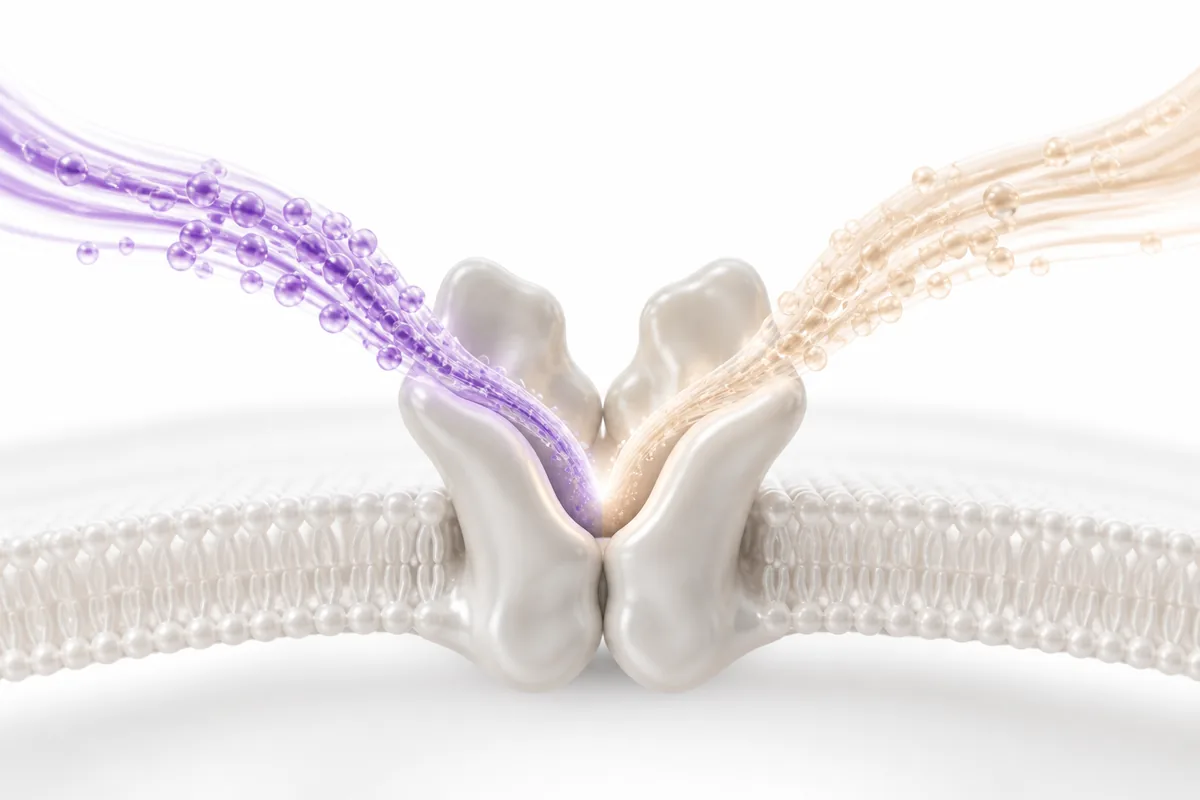
TL;DR: Tirzepatide is a synthetic 39-amino-acid peptide studied as a dual GIP/GLP-1 receptor agonist - a “twincretin” that activates two incretin pathways at once instead of one. In the SURMOUNT and SURPASS clinical research programs, this dual mechanism was linked to substantial reductions in body weight and HbA1c, distinguishing it from single-target GLP-1 agonists like semaglutide.
Tirzepatide represents a new class of research peptides known as “twincretins” - compounds that activate both the GIP and GLP-1 receptors simultaneously. This dual, once-weekly mechanism has produced some of the most closely studied results in modern metabolic science, and it is a frequent subject of laboratory investigation. This guide summarizes what tirzepatide is, how its dual mechanism is understood to work, and the key considerations that matter when handling it strictly for research purposes only.
What is Tirzepatide?
Tirzepatide is a synthetic, 39-amino-acid peptide engineered as a dual GIP and GLP-1 receptor agonist. It is designed for once-weekly administration in the study protocols where it is used, owing to a fatty acid modification that extends its circulating half-life. The term “twincretin” reflects that it engages two incretin pathways rather than one, distinguishing it from single-target GLP-1 agonists such as semaglutide.
Incretins are gut-derived hormones released after nutrient intake that help regulate blood glucose and satiety. The two principal incretins are glucose-dependent insulinotropic polypeptide (GIP) and glucagon-like peptide-1 (GLP-1). Tirzepatide was the first agent to combine agonism at both receptors in a single molecule, and it is studied in reference material at the 5mg and 10mg concentrations. Related multi-receptor research compounds include retatrutide, which adds glucagon-receptor agonism on top of the GIP/GLP-1 framework.
Mechanism of Action
The defining feature of tirzepatide is co-agonism: it binds and activates two distinct receptors, which appear to interact in a complementary way.
GLP-1 Receptor Activation
- Enhances glucose-dependent insulin secretion
- Slows gastric emptying
- Reduces appetite and food intake signaling in the central nervous system
- Suppresses glucagon release when glucose is elevated
GIP Receptor Activation
- Contributes additional insulin-secretory signaling
- Is associated with improved insulin sensitivity in adipose tissue
- May influence energy expenditure and lipid handling
- Appears to complement GLP-1 signaling in appetite and satiety pathways
Why the Dual Mechanism Differs from Single GLP-1 Agonists
Single GLP-1 agonists act on one incretin axis. Tirzepatide’s addition of GIP activity is thought to produce effects that are additive or synergistic, particularly on insulin sensitivity and body-weight endpoints. Researchers have proposed that GIP receptor engagement may also modulate the tolerability profile relative to GLP-1 activity alone, although the precise contribution of each pathway remains an active area of investigation. This co-agonist design is the central hypothesis behind the compound’s distinct research profile. For a broader look at how these molecules compare, see the GLP-1 comparison of semaglutide, tirzepatide and retatrutide.
Research Background and Key Findings
Tirzepatide has been evaluated in two large, named clinical programs whose results are the foundation of current understanding.
The SURMOUNT Program (Body Weight)
The SURMOUNT series studied tirzepatide with body-weight endpoints. In the pivotal SURMOUNT-1 trial (Jastreboff et al., 2022), participants receiving the highest studied doses achieved mean body-weight reductions in the range of roughly 20-22% over 72 weeks, among the largest reductions reported for a pharmacological agent in this setting.
Illustrative curves based on reported SURMOUNT-1 (tirzepatide) and comparable single-GLP-1 trial endpoints. Research data, not a human protocol.
The SURPASS Program (Glycemic Endpoints)
The SURPASS series focused on glycemic control. In SURPASS-2 (Frías et al., 2021), tirzepatide was compared head-to-head with semaglutide in type 2 diabetes and produced greater reductions in HbA1c across the studied doses, alongside meaningful reductions in body weight.
Together, these programs frame tirzepatide as a compound with robust effects on both glycemic and weight-related endpoints in controlled clinical research.
Tirzepatide vs Semaglutide
The most common comparison in metabolic peptide research is tirzepatide against semaglutide, which differ primarily in mechanism.
| Factor | Tirzepatide | Semaglutide |
|---|---|---|
| Mechanism | Dual GIP + GLP-1 | Single GLP-1 |
| Dosing | Once weekly | Once weekly |
| Reported weight endpoints | Larger in head-to-head data | Substantial |
| Titration | Gradual, multi-step | Gradual, multi-step |
In the SURPASS-2 head-to-head comparison, tirzepatide showed greater average effects on both glycemic and weight endpoints. However, individual responses vary, and single-agonist semaglutide remains extensively studied. For research contexts exploring a transition between compounds, see switching from semaglutide to tirzepatide. Some research also examines other routes to multi-pathway engagement, such as GLP-1/amylin co-agonism in CagriSema.
Reconstitution and Handling Overview
Tirzepatide reference material is typically supplied as a lyophilized (freeze-dried) powder that must be reconstituted with bacteriostatic water before use in a laboratory setting. Accurate reconstitution determines concentration, so calculations should be documented for each vial and batch. The general workflow - selecting a diluent volume, calculating draw volumes, and recording concentration - is covered in detail in the peptide reconstitution guide. Concentration-specific reference data is available on the tirzepatide 5mg and tirzepatide 10mg pages.
Research Dosing Considerations
In the clinical programs described above, tirzepatide was administered using a gradual titration concept: starting at a low amount and increasing in stepwise increments over several weeks. This escalation approach is associated in the literature with better gastrointestinal tolerability compared with starting at a high level.
The table below reflects the escalation schedule used in published clinical trials for reference only. It is not a human medical instruction, dosing recommendation, or protocol for use outside a controlled research context.
| Week (trial reference) | Level |
|---|---|
| 1-4 | 2.5mg |
| 5-8 | 5mg |
| 9-12 | 7.5mg |
| 13-16 | 10mg |
| 17-20 | 12.5mg |
| 21+ | 15mg |
- 1
Weeks 1-4
2.5mg starting level.
- 2
Weeks 5-8
Step up to 5mg.
- 3
Weeks 9-12
7.5mg.
- 4
Weeks 13-16
10mg.
- 5
Weeks 17-20
12.5mg.
- 6
Week 21+
15mg maximum studied level.
Some research discussions also examine much smaller incremental approaches; a general overview of that concept is provided in the GLP-1 microdosing guide.
Storage and Stability
Proper handling preserves peptide integrity:
- Lyophilized powder: store refrigerated; long-term storage in a freezer is common for extended periods.
- After reconstitution: keep refrigerated (typically 2-8 degrees C) and protect from light.
- Avoid repeated freeze-thaw cycles, agitation, and prolonged room-temperature exposure, each of which can degrade the peptide.
- Label each vial with reconstitution date and concentration for traceability.
Reconstituted tirzepatide is generally considered usable for several weeks when refrigerated, though stability depends on diluent, concentration, and handling. For handling considerations that apply across the wider peptide category, see the general peptide storage guide.
Safety, Legality and Research Disclaimers
Tirzepatide sold as a research peptide is not a prescription medicine and is not equivalent to any approved pharmaceutical product. Research-grade material is intended for laboratory and educational study only, not for human or veterinary use.
- Reported effects in the literature include gastrointestinal events (nausea, diarrhea, constipation) that tend to lessen with gradual titration in clinical settings.
- Regulatory status varies by jurisdiction; researchers are responsible for compliance with local laws and institutional guidelines.
- Any work with research peptides should follow the safety and ethics policies of the relevant institution.
This article is educational and does not constitute medical advice.
Sourcing and Quality Verification for Research
Because research peptides are not manufactured to pharmaceutical prescription standards, verification of quality is important for reproducible work. General markers researchers look for include:
- Third-party testing by an independent analytical laboratory.
- A Certificate of Analysis (COA) documenting identity and purity (commonly assessed by HPLC and mass spectrometry).
- Batch traceability, so a given vial can be linked to its specific production and test records.
- Clear labeling of net peptide content, concentration, and storage requirements.
These are generic quality-verification principles rather than an endorsement of any particular supplier. A closer look at reading these documents is available in the guide to understanding peptide purity and COAs, alongside the broader peptide quality and safety guide.
Related reading
Frequently Asked Questions
What does “dual agonist” mean for tirzepatide?
It means the molecule activates two receptors - GIP and GLP-1 - rather than one. This co-agonism is the basis for its distinct research profile compared with single GLP-1 agonists.
How is tirzepatide different from semaglutide?
Semaglutide is a single GLP-1 receptor agonist, while tirzepatide adds GIP receptor activity. In head-to-head clinical data such as SURPASS-2, tirzepatide showed larger average effects on glycemic and weight endpoints.
Why is gradual titration used in the studies?
Stepwise escalation is associated in the literature with improved gastrointestinal tolerability compared with beginning at a high level. It is a clinical-trial concept, not a personal dosing instruction.
How should reconstituted tirzepatide be stored?
Refrigerated at roughly 2-8 degrees C, protected from light, and away from repeated freeze-thaw cycles. Label each vial with its date and concentration.
Is tirzepatide a medicine I can use?
No. Research-grade tirzepatide is a laboratory chemical for study only and is not a prescription product or intended for human consumption.
How can research quality be verified?
Look for independent third-party testing, a Certificate of Analysis, and batch traceability documenting identity and purity.
References
- Jastreboff AM, et al. “Tirzepatide Once Weekly for the Treatment of Obesity” (SURMOUNT-1). New England Journal of Medicine. 2022.
- Frías JP, et al. “Tirzepatide versus Semaglutide Once Weekly in Patients with Type 2 Diabetes” (SURPASS-2). New England Journal of Medicine. 2021.
Last updated: July 4, 2026
Disclaimer: This information is for educational and research purposes only. Peptides are research chemicals not intended for human consumption.