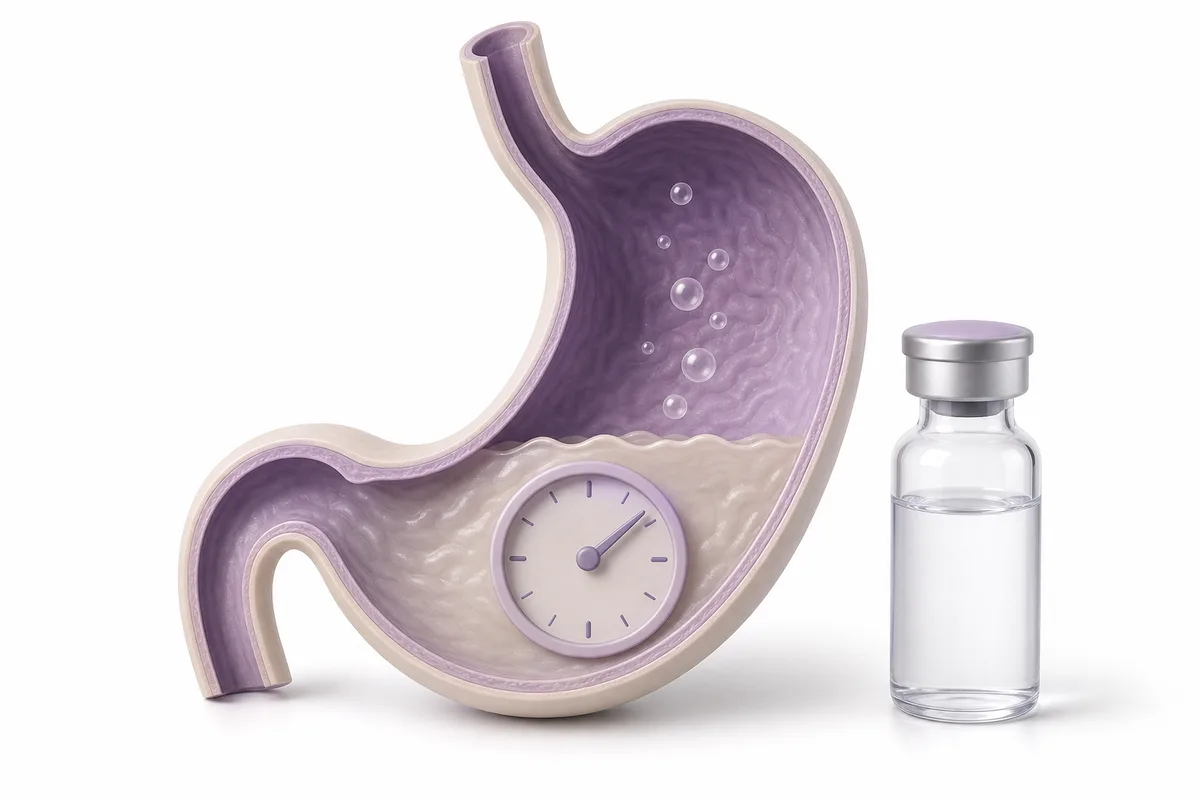
TL;DR: Sulfur (rotten-egg) burps on tirzepatide or retatrutide are the smell of hydrogen sulfide gas, produced when protein-rich food sits longer in a gut that the drug has deliberately slowed down. It is a downstream consequence of delayed gastric emptying, which is a large part of how these compounds work, so it is expected rather than alarming. The biggest lever is eating smaller meals and stopping at first fullness. Dialing back high-sulfur foods during a flare and timing lighter meals near the dose peak handle most of the rest. It usually eases as the body adapts to a steady dose.
Almost nobody puts this in the brochure, but it is one of the most searched tirzepatide side effects for a reason: the burps smell genuinely awful, they arrive without warning, and no one told you they were coming. If you have been quietly Googling “why do my burps smell like rotten eggs” at 11pm, you are in extremely common company. The good news is that this is one of the more fixable GI complaints, and once you understand the mechanism the fixes are obvious.
Why the burps smell like that
Tirzepatide is a GIP and GLP-1 receptor agonist; retatrutide adds a glucagon receptor to the mix. One of their shared, load-bearing effects is slowing gastric emptying — food leaves your stomach and moves through the upper gut more slowly than it used to. That delay is not a bug. It is a big part of why you feel full faster, eat less, and see blood sugar smooth out.
The rotten-egg smell is hydrogen sulfide (H₂S). When protein-rich and sulfur-containing food lingers longer than usual, gut bacteria get more time to ferment it, and one of the byproducts of breaking down sulfur-bearing amino acids is H₂S gas. That gas comes back up as a burp carrying the unmistakable smell of, well, rotten eggs. Sometimes it travels the other direction too, which is why sulfur burps and sulfur-smelling gas often show up together.
So this is not a sign something is broken. It is the predictable result of putting normal-sized, protein-heavy meals into a gut that is now moving at half speed. Frame it that way and the fixes stop being mysterious.
When it tends to show up
Sulfur burps are not random. They cluster around a few very recognizable situations, and noticing your own pattern is half the battle.
- After a dose increase. Titration steps are the classic trigger. Each bump slows the gut a little more before you have adapted to the last level, so the weeks right after a dose increase are usually the worst.
- After large meals. The more food sitting in a slow stomach, the more substrate for fermentation. Volume matters more than most people expect.
- After high-fat or high-protein meals. Fat slows emptying further on its own, and protein is where the sulfur comes from. A big steak-and-eggs plate is close to a worst-case combination.
- When you eat past fullness. On these compounds, fullness arrives early and means it. Pushing past it — finishing the plate out of habit — is the single most reliable way to summon an evening of sulfur burps.
If you map your worst episodes against this list, you will almost always find they line up with a big meal, a recent dose increase, or both. That is useful, because it points straight at what to change.
What actually stops them
Here is the part you came for. Roughly in order of how much they help:
Eat smaller meals and stop at first fullness. This is the biggest lever by a wide margin. Sulfur burps are largely a volume problem — you are putting in more than the slowed gut can move along, so it backs up and ferments. Smaller portions, eaten slowly, with a genuine stop at the first sign of fullness, resolve the issue for a lot of people on their own. Splitting the same food into two smaller sittings beats one large plate.
Dial back high-sulfur foods during a flare. You do not need to eat this way forever, but when the burps are active, cutting the sulfur load gives the gas nowhere to come from. The usual suspects:
- Eggs (the most notorious offender)
- Red meat and other heavy protein loads
- Garlic and onions
- Cruciferous vegetables — broccoli, cauliflower, cabbage, Brussels sprouts
- Dairy, for some people
Think of this as a temporary flare protocol, not a permanent diet. Pull the biggest sulfur sources for a few days, let things settle, then reintroduce.
Time lighter meals near the dose peak. The slowing effect is strongest in the day or two after your injection. Keeping meals lighter and lower in fat during that window, and saving any larger protein-heavy meal for later in the week, spreads the load away from when your gut is slowest.
Mind hydration and fiber balance. Enough water keeps things moving; a sudden pile of fiber on top of an already-slow gut can add to the fermentation and bloating rather than help, so ramp fiber gradually rather than dumping it in.
Most people find that stacking two or three of these — smaller meals plus a temporary cut to eggs and red meat, say — clears things up within a few days.
Does it ever go away on its own?
Usually, yes. Sulfur burps track the titration curve: they tend to be worst in the weeks right after a dose increase and settle as your body adapts to that level. Once you reach a steady maintenance dose and hold there, the gut adjusts to its new pace and the burps typically fade into the occasional nuisance rather than a nightly event. This is the same adaptation story behind most early GI complaints, which our GLP-1 side effects management guide walks through across the board. If your flares line up neatly with dose steps, the tirzepatide dosing and titration overview covers why a slower climb often smooths the ride.
The one time sulfur burps are worth more than a shrug: if they arrive alongside severe abdominal pain, persistent vomiting, or a stomach that feels like nothing is moving through it at all, that is beyond the normal picture and worth getting checked rather than managing at home. That is the exception, not the expectation — for the vast majority it is a smelly, harmless, fixable annoyance.
Putting it together
Sulfur burps are the least glamorous entry in the tirzepatide side-effect catalog and one of the most manageable. They are the direct, predictable output of a gut that has been deliberately slowed, fed more protein than it can currently move, and left to ferment the surplus. Shrink the meals, stop at first fullness, ease off eggs and red meat while things are flaring, keep the heaviest plates away from the dose peak, and give a new dose a couple of weeks to bed in. Do that and the rotten-egg burps go from a nightly event to a rare one. The same slowed-emptying mechanism drives a lot of the overlapping GI story — appetite changes, early fullness, the shift in GLP-1 food noise — so the habits that fix the burps tend to make the rest of it easier too.
Frequently asked questions
Why do I get rotten-egg burps on tirzepatide?
Tirzepatide slows gastric emptying, so food stays in your upper gut longer. Gut bacteria then have more time to ferment sulfur-containing protein, producing hydrogen sulfide gas, which is what you smell when you burp. It is a downstream effect of the slowed emptying that makes the drug work, so it is expected rather than a warning sign — and it responds well to smaller meals and less sulfur-rich food.
Do sulfur burps mean something is wrong?
Usually not. On their own they are a normal, mechanistically expected consequence of slowed gastric emptying, and they are one of the more fixable GI complaints. The exception is if they come with severe abdominal pain, persistent vomiting, or a gut that feels like nothing is passing through it at all — that combination is beyond the ordinary picture and worth getting checked rather than just managing at home.
What foods make sulfur burps worse?
High-sulfur and high-protein foods are the main drivers: eggs are the classic offender, along with red meat, garlic, onions, and cruciferous vegetables like broccoli, cauliflower, cabbage, and Brussels sprouts. Dairy bothers some people too. High-fat meals make it worse indirectly by slowing emptying even further. During a flare, temporarily cutting the biggest sulfur sources usually helps quickly.
How long do sulfur burps last on tirzepatide?
For most people they are worst in the weeks right after a dose increase and settle as the body adapts to that level. Once you hold at a steady maintenance dose, the gut adjusts to its slower pace and the burps typically fade to an occasional annoyance. If they flare with every titration step, a slower climb between doses often keeps them milder.
Does retatrutide cause sulfur burps too?
Yes. Retatrutide acts on the GLP-1 and glucagon receptors along with driving similar slowed gastric emptying, so the same rotten-egg mechanism applies. The triggers and fixes are the same: smaller meals, stopping at first fullness, and easing off high-sulfur foods during a flare. If you are dealing with other adaptation effects on it as well, our retatrutide dysesthesia and tingling piece covers a separate one.
References
-
Jastreboff AM, Aronne LJ, Ahmad NN, et al. Tirzepatide Once Weekly for the Treatment of Obesity. New England Journal of Medicine. 2022;387(3):205-216. doi:10.1056/NEJMoa2206038
-
Nauck MA, Quast DR, Wefers J, Meier JJ. GLP-1 receptor agonists in the treatment of type 2 diabetes – state-of-the-art. Molecular Metabolism. 2021;46:101102. doi:10.1016/j.molmet.2020.101102
-
Maslowski KM, Mackay CR. Diet, gut microbiota and immune responses. Nature Immunology. 2011;12(1):5-9.
-
Blachier F, Beaumont M, Andriamihaja M, et al. Changes in the Luminal Environment of the Colonic Epithelial Cells and Physiopathological Consequences. American Journal of Pathology. 2017;187(3):476-486.
Research use only. This article explains a commonly reported side effect for educational purposes. It is not medical advice and does not recommend any dose, protocol, or human use. Compounds discussed here are research chemicals; handle all research materials in accordance with applicable EU regulations and institutional guidance.