TL;DR: GLP-1 side effects management centres on one root cause: these peptides slow gastric emptying, which drives first-week nausea, sulfur or eggy burps, constipation and fatigue. In clinical trials most of these events are mild-to-moderate, dose-related and transient. Slow titration, smaller lower-fat meals, steady hydration and adequate fibre are the evidence-based levers that help most.
If you have read any peptide forum or a GLP-1 subreddit for more than five minutes, you have seen the same questions asked on repeat: Why do I feel queasy every time I dose? What are these awful rotten-egg burps? Why am I suddenly constipated and exhausted? These are the most common reasons people struggle with, or abandon, glucagon-like peptide-1 (GLP-1) receptor agonists like semaglutide and tirzepatide.
This article walks through what the published clinical literature actually reports about these gastrointestinal (GI) effects, why they happen mechanistically, how long they typically last, and which mitigation strategies have evidence behind them. It is educational and research-focused: nothing here is a personal dosing prescription or therapeutic advice.
Why GLP-1 Side Effects Happen: One Mechanism, Many Symptoms
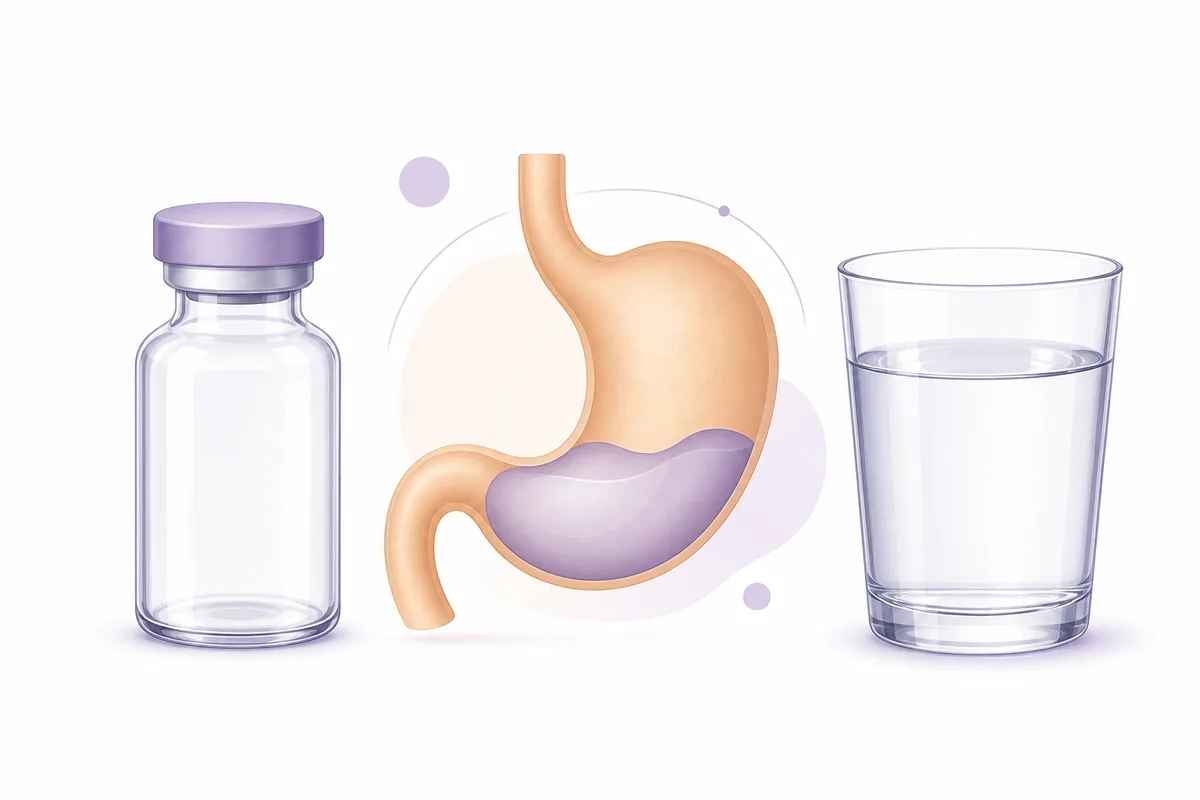
Most of the discomfort people describe traces back to a single, well-documented pharmacological action: delayed gastric emptying. GLP-1 receptor agonists mimic a natural gut hormone that relaxes the gastric fundus, increases gastric compliance, inhibits antral contractility and raises pyloric tone. The net effect is that food leaves your stomach more slowly than it used to.
That single mechanism cascades into the cluster of symptoms people report:
- Nausea and early fullness — a fuller, slower-emptying stomach signals satiety and queasiness, especially after larger or fatty meals.
- Sulfur or “eggy” burps — food (particularly sulfur-rich proteins and vegetables) lingers longer, giving gut bacteria more time to ferment it and produce hydrogen sulfide gas, which smells like rotten eggs.
- Constipation — slowed GI motility does not stop at the stomach; transit slows further down too.
- Fatigue — largely indirect, driven by sharply reduced calorie intake, appetite suppression, and fluid or electrolyte losses from GI symptoms.
Understanding this shared root cause is the key to GLP-1 side effects management: nearly every practical mitigation is really just a way to avoid overwhelming an already-slowed stomach.
What the Research Shows: How Common Are These Side Effects?
GI events are the headline adverse effects in every major GLP-1 trial, and the numbers are consistent across programmes. In the STEP 1 trial of once-weekly semaglutide 2.4 mg (Wilding et al., NEJM, 2021), GI disorders occurred in 74.2% of the semaglutide group versus 47.9% on placebo, broken down as nausea (44.2%), diarrhoea (31.5%), vomiting (24.8%) and constipation (23.4%). Crucially, most events were mild-to-moderate, transient, and clustered around dose escalation.
Wilding et al., NEJM 2021 — % of participants reporting each event
For tirzepatide, the pooled SURPASS 1–5 analysis (Patel et al., Diabetes, Obesity & Metabolism, 2024; N = 6,263) reported nausea in 12–24%, diarrhoea in 12–22% and vomiting in 2–13%, again mostly mild-to-moderate and transient during titration. Nausea was clearly dose-dependent: pooled rates were roughly 13% at 5 mg, 18% at 10 mg and 24% at 15 mg.
Patel et al., SURPASS 1–5 pooled — % reporting nausea by weekly dose
The table below summarises the reported ranges. Note these come from different trial populations, so treat them as directional rather than head-to-head.
| Side effect | Semaglutide 2.4 mg (STEP 1) | Tirzepatide (SURPASS 1–5 pooled) | Typical onset & course |
|---|---|---|---|
| Nausea | ~44% | ~12–24% (dose-dependent) | Early; peaks after dose increases, fades over weeks |
| Diarrhoea | ~32% | ~12–22% | Early; usually transient |
| Vomiting | ~25% | ~2–13% | Early; transient |
| Constipation | ~23% | ~5–9% | Can persist; managed with fibre/fluids |
| Eructation (burping) | reported | ~2–5% | Early; often subsides |
| Fatigue | reported | ~5–11% (class labels) | Titration & calorie-deficit related |
An important, reassuring finding from Wharton et al. (Diabetes, Obesity & Metabolism, 2022): with semaglutide 2.4 mg, 98.1% of GI events were mild-to-moderate, and weight loss was similar whether or not participants experienced GI symptoms. In other words, you do not need to feel sick for the peptide to work.
One more evidence-based lever worth flagging: gradual dose escalation meaningfully improves tolerability. Analyses report the proportion of patients experiencing nausea was substantially lower with a dose-escalation schedule than without. This is exactly why slow titration is the first pillar of any sensible plan — covered in our semaglutide dosing and titration guide and the parallel tirzepatide dosing and titration walkthrough.
Nausea and the First Week: What to Expect
Nausea is the symptom people fear most, and the literature shows it is heavily front-loaded. It tends to appear or worsen in the days after each dose increase and settles as the body adapts at a stable dose. Because the mechanism is a slower, fuller stomach, the strategies that help most are the ones that reduce gastric load:
- Eat smaller, more frequent meals — four to six small meals or structured snacks rather than three large ones.
- Lower the fat content — high-fat meals themselves slow gastric emptying, compounding the effect. Grilling, baking or steaming beats frying.
- Stop eating at the first sign of fullness — the satiety signal is stronger now; pushing past it invites nausea.
- Sip fluids between meals, not large volumes with them — drinking a lot alongside food distends the stomach and can worsen queasiness.
- Ginger and peppermint have modest clinical support for nausea and are low-risk to try.
These are the same principles echoed in the 2025 joint nutrition Advisory from the American College of Lifestyle Medicine and partner societies (Mozaffarian et al.), which frames proactive GI management and adequate protein and micronutrient intake as central to tolerating therapy well.
Sulfur Burps and Constipation: The Slow-Transit Symptoms
Sulfur burps are one of the most-complained-about and least-discussed effects. The mechanism is straightforward: delayed emptying means sulfur-containing foods sit and ferment, and gut bacteria release hydrogen sulfide — the classic rotten-egg smell. Clinical labelling puts eructation at roughly 2–7% depending on the specific agent, and it usually shows up early and eases over time. Practical, low-risk levers include reducing high-sulfur foods (eggs, red meat, garlic, onions, cruciferous vegetables) during flares, keeping meals smaller, and not lying down right after eating.
Constipation is the mirror image of the same slowed motility, just further down the tract. The evidence-aligned toolkit is unglamorous but effective: increase both soluble and insoluble fibre (oats, fruit, vegetable skins), pair it with genuinely adequate water (fibre without fluid can make things worse), and stay physically active. Because reduced overall food intake also means less fibre by default, this is a place where a deliberate plan matters.
Fatigue: Mostly Indirect, Usually Manageable
Class prescribing information lists fatigue in roughly 5–11% of users, but the mechanism is largely indirect rather than a direct drug effect. The leading explanations in the literature are the sharp calorie deficit from appetite suppression, dehydration and electrolyte shifts from nausea/vomiting/diarrhoea, and — over longer courses — loss of lean mass alongside fat.
That last point is important enough to plan around: preserving muscle protects both energy and metabolic rate. Adequate protein intake and resistance training are the evidence-based countermeasures, which we cover in depth in the guide to preventing muscle loss on GLP-1 therapy. Addressing hydration and not under-eating protein tends to resolve much of the tiredness people attribute to the medication itself.
Putting GLP-1 Side Effects Management Together
The through-line of good GLP-1 side effects management is simple: your stomach is now slower and fuller, so stop overwhelming it and support the downstream consequences. Concretely, that means titrating slowly, eating smaller lower-fat meals, hydrating steadily, prioritising fibre and protein, and giving each dose step time to settle before climbing. For readers researching specific compounds and vial sizes, our reference pages for semaglutide 10 mg and tirzepatide 10 mg collect the mechanism, handling and citation details in one place.
None of this replaces individual medical guidance — persistent or severe symptoms deserve a clinician’s eyes, not a forum thread.
Frequently Asked Questions
How do I stop the sulfur or eggy burps?
Sulfur burps come from food fermenting in a slower-emptying stomach and releasing hydrogen sulfide. During flares, research-aligned tactics include eating smaller meals, temporarily cutting high-sulfur foods (eggs, red meat, garlic, onions, cruciferous vegetables), not lying down after eating, and staying hydrated. They typically appear early in therapy and ease over time.
How do I fix constipation and fatigue on a GLP-1?
Both stem from slowed motility and reduced intake. For constipation, combine soluble and insoluble fibre with genuinely adequate water and physical activity. For fatigue, address the calorie deficit, hydration and electrolytes, and protect lean mass with sufficient protein and resistance training. Persistent symptoms warrant a clinician’s assessment rather than self-management alone.
How long does the nausea last and does it subside as I titrate?
In the STEP and SURPASS trials, nausea was mostly mild-to-moderate, transient, and clustered around dose escalation. It tends to spike in the days after each dose increase, then fade as the body adapts at a stable dose. Nausea is dose-dependent, which is why slow, stepwise titration meaningfully improves tolerability.
What should I expect the first week starting a GLP-1?
Starting doses are deliberately low, so many people notice little at first, while others feel early fullness, mild nausea or reduced appetite within days of the first injection. Effects are usually mild and front-loaded around each dose change. Smaller, lower-fat meals and steady hydration make the adjustment period considerably smoother.
Which GLP-1 side effects mean I should stop and seek help?
Most GI effects are mild and transient, but some warrant prompt medical attention: severe or persistent abdominal pain (especially radiating to the back, a pancreatitis concern), relentless vomiting with signs of dehydration, inability to keep fluids down, or symptoms of gallbladder trouble. Any severe or non-resolving reaction should be evaluated by a clinician.
References
- Wilding JPH, Batterham RL, Calanna S, et al. Once-Weekly Semaglutide in Adults with Overweight or Obesity. New England Journal of Medicine. 2021;384(11):989-1002.
- Patel H, Khunti K, Rodbard HW, et al. Gastrointestinal adverse events and weight reduction in people with type 2 diabetes treated with tirzepatide in the SURPASS clinical trials. Diabetes, Obesity & Metabolism. 2024;26(2):473-481.
- Wharton S, Calanna S, Davies M, et al. Gastrointestinal tolerability of once-weekly semaglutide 2.4 mg in adults with overweight or obesity, and the relationship between gastrointestinal adverse events and weight loss. Diabetes, Obesity & Metabolism. 2022;24(1):94-105.
- Mozaffarian D, Agarwal M, Aggarwal M, et al. Nutritional priorities to support GLP-1 therapy for obesity: A joint Advisory from the American College of Lifestyle Medicine, the American Society for Nutrition, the Obesity Medicine Association, and The Obesity Society. The American Journal of Clinical Nutrition. 2025;122(2):344-367.
- Jensterle M, Ferjan S, Battelino T, et al. Clinical Consequences of Delayed Gastric Emptying With GLP-1 Receptor Agonists and Tirzepatide. Journal of Clinical Endocrinology & Metabolism. 2024 (published online).
- Frías JP, Davies MJ, Rosenstock J, et al. Tirzepatide versus Semaglutide Once Weekly in Patients with Type 2 Diabetes. New England Journal of Medicine. 2021;385(6):503-515.
- Jastreboff AM, Aronne LJ, Ahmad NN, et al. Tirzepatide Once Weekly for the Treatment of Obesity. New England Journal of Medicine. 2022;387(3):205-216.
This article is educational and intended for research and informational purposes only. It is not medical advice or a dosing prescription; consult a qualified clinician for personal guidance.