TL;DR: Every PT-141 dosage question traces back to one tradeoff: the same central melanocortin signal that drives the desired effect also drives nausea and flushing. In the FDA’s RECONNECT phase 3 program behind Vyleesi, nausea occurred in 40.0% of bremelanotide users versus 1.3% on placebo, and flushing in 20.3% versus 0.3%. The approved label fixes the dose at 1.75 mg subcutaneously, taken at least 45 minutes before anticipated activity, capped at 8 doses per month. “Not working” complaints usually split into two very different problems — non-response and vendor quality — and a smaller cluster of anecdotal reward-blunting reports deserves an honest, unamplified look.
Vyleesi vs. research PT-141: which dosage are we even discussing?
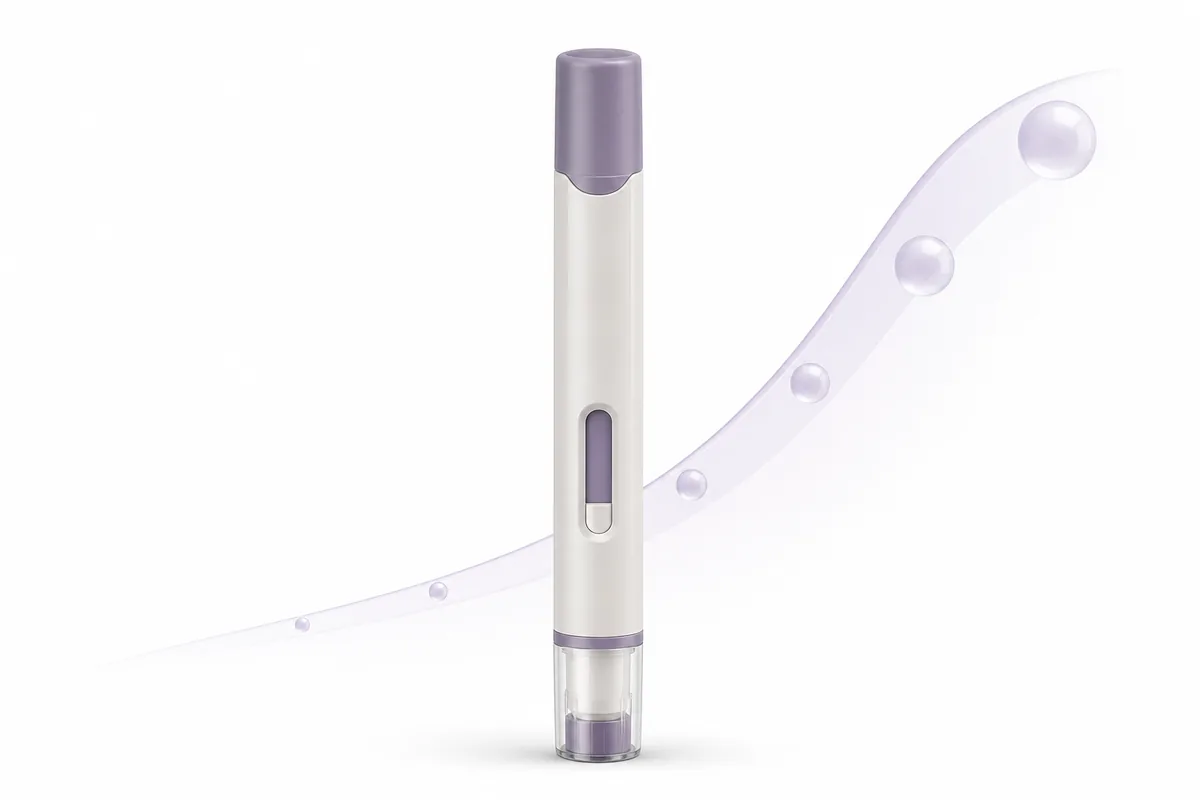
Our PT-141 overview covers this distinction in more depth, but it matters enough to restate here: Vyleesi is the FDA-approved, subcutaneous autoinjector version of bremelanotide, dosed at a single fixed strength and prescribed for acquired, generalized hypoactive sexual desire disorder (HSDD) in premenopausal women. Research-grade PT-141 is the same molecule, sold without the pharmaceutical manufacturing oversight or Certificate of Analysis guarantee that stands behind the branded product.
Every adverse-event figure and label detail below comes from the approved-product trial program (RECONNECT and its supporting phase 2 work) and Vyleesi’s FDA prescribing information, not from unregulated material.
What the approved label actually says
Vyleesi’s dosing is deliberately narrow — one strength, one route, a hard monthly ceiling. The label facts, all pulled from the FDA-approved prescribing information:
A few details worth sitting with:
- There is no titration ladder. Vyleesi is not stepped up from a low dose to a high one the way some peptides are — every dose is 1.75 mg, delivered by a single-use autoinjector to the abdomen or thigh.
- The label explicitly instructs against more than one dose within 24 hours, and against exceeding eight doses in a month. In the clinical trials, most participants used it two or three times a month and no more than once a week.
- The 45-minute lead time reflects the drug’s central mechanism: bremelanotide has to cross into the central nervous system and act on melanocortin receptors, which takes longer to manifest than a peripherally acting agent.
1.75 mg is simply what the entire phase 3 safety and efficacy record is built on — there is no lower, gentler dose with a comparable trial dataset behind it.
The nausea and flushing tradeoff, in the trial’s own numbers
This is the number most people actually want: how often does PT-141 cause nausea or flushing, and how does that compare to a placebo shot. The RECONNECT phase 3 program (Clayton et al., pooled across roughly 627 bremelanotide and 620 placebo participants) reported these treatment-emergent adverse event rates directly on the approved label:
Pooled phase 3 trial data, FDA-approved Vyleesi prescribing information.
Nausea was also the leading reason people stopped taking the drug: about 18% of bremelanotide participants discontinued for an adverse event, versus 2% on placebo. Onset typically began within about 30 minutes of dosing and lasted a median of roughly 2.4 hours, with most episodes mild to moderate rather than severe.
The label also documents a transient cardiovascular signal: small increases in blood pressure (up to roughly 6 mmHg systolic, 3 mmHg diastolic) alongside a modest drop in heart rate of up to about 5 beats per minute, peaking two to four hours post-dose and returning to baseline within about 12 hours. It’s a real, on-label effect — the reason the label restricts use in people with uncontrolled hypertension or known cardiovascular disease.
Why the tradeoff scales with dose
The phase 2 dose-ranging work that preceded RECONNECT tested bremelanotide across 0.75 mg, 1.25 mg, and 1.75 mg against placebo. Adverse-event-related discontinuations rose with dose: more participants dropped out for tolerability reasons at 1.75 mg than at the lower strengths, with facial flushing, nausea, and emesis (vomiting) the most common reasons cited. That dose-response relationship is a big part of why the approved product settled on a single fixed strength rather than a titration schedule — 1.75 mg was where the desire benefit justified the tolerability cost, not the lowest dose that produced any signal at all.
This is also the answer to a common question: is there a “lowest effective dose” that skips the nausea? Lower doses did trend toward fewer adverse events, but they also didn’t carry the approved product forward — a tradeoff between effect and side effects, not a dosage loophole.
”PT-141 not working”: two different problems
A recurring theme in PT-141 discussion online is some version of “I did everything right and felt nothing.” That complaint usually resolves into one of two very different explanations.
Vendor and product quality. Research-grade PT-141 is sold without the manufacturing consistency, sterility, or purity guarantees a regulated pharmaceutical requires. Underdosed vials, degraded peptide, or mislabeled concentration are common, mundane explanations for “nothing happened,” and they show up repeatedly in user discussion of specific vendors. This is precisely the variable our guide to vetting a peptide vendor is built to help sort through — third-party testing and Certificates of Analysis matter more here than for many other peptides, because there is no clinical feedback loop confirming the material was ever active.
Genuine non-response. Even in the tightly controlled RECONNECT trials, not everyone who received bremelanotide reported a meaningful improvement in desire — no drug in this category works for 100% of the population it’s tested in. Individual variability in melanocortin receptor sensitivity is a real, published variable, not a cop-out explanation. Distinguishing genuine non-response from a material problem is hard without lab verification, which is why a Certificate of Analysis is worth more here than in most categories.
The anhedonia question: what’s reported vs. what’s proven
A smaller, more specific complaint cluster shows up in peptide-community discussion: a handful of users describe blunted reward or motivation — anhedonia — after PT-141 or Melanotan II use, with at least one widely circulated comment summarizing the calculus as simply not being worth the risk to them personally.
It’s worth being precise about the evidentiary status here. Anhedonia or reward-blunting has not been reported as a class effect in the controlled phase 2 or phase 3 program behind Vyleesi — it does not appear among the treatment-emergent adverse events listed on the label alongside nausea, flushing, headache, and injection-site reactions. That absence doesn’t prove it can’t happen to an individual; self-selected anecdotes and randomized trials measure different things, and a rare effect can exist without showing up in a trial population of a few hundred to a thousand people. Treat these reports as real anecdotes worth taking seriously, not as an established, trial-confirmed side effect — and not as something to dismiss outright either.
How this fits with dosing peptides generally
None of the mechanics here are unique to PT-141 — dose-dependent side effects and converting a labeled milligram amount into something measurable are recurring themes across this category. Our peptide dosing fundamentals guide covers those general principles, and the mcg-to-units insulin syringe conversion guide covers the measurement side for peptides reconstituted outside a fixed autoinjector format. For how PT-141’s central mechanism compares to other neuroendocrine peptides studied in reproductive contexts, see our piece on kisspeptin and oxytocin.
Frequently asked questions
What is the standard PT-141 dosage in the approved product?
The FDA-approved product, Vyleesi, uses a single fixed dose of 1.75 mg delivered subcutaneously via autoinjector, with no titration schedule. It is taken as needed, at least 45 minutes before anticipated sexual activity, with a hard label limit of one dose per 24 hours and no more than 8 doses per month.
How common is nausea with PT-141?
In the pooled RECONNECT phase 3 trials underlying the Vyleesi label, nausea occurred in 40.0% of bremelanotide participants versus 1.3% on placebo, making it the single most common adverse event and the leading reason people discontinued treatment. Onset was typically within about 30 minutes of dosing, with a median duration of roughly 2.4 hours.
Is there a lowest effective PT-141 dose that avoids the side effects?
The published phase 2 dose-ranging data (0.75 mg, 1.25 mg, and 1.75 mg) showed adverse events and discontinuations trending higher at higher doses, but the approved product settled on the 1.75 mg fixed dose because that was where the desire benefit justified the tolerability tradeoff in the pivotal trials. There is no separately validated lower dosage that preserves efficacy while eliminating nausea and flushing.
Why do people report PT-141 “not working”?
This complaint usually splits into two distinct causes: unregulated research material that is underdosed, degraded, or mislabeled, and genuine individual non-response, since even in controlled trials not every participant reported a meaningful benefit. Vendor and material quality is worth ruling out first, since it has no equivalent in a regulated pharmaceutical product.
Does PT-141 cause anhedonia or blunted motivation?
Some anecdotal reports describe reward-blunting or anhedonia after PT-141 or Melanotan II use, but this has not been observed as a class effect in the controlled phase 2 or phase 3 trial program behind Vyleesi, and it does not appear on the approved label’s adverse event list. These reports deserve to be taken seriously as individual experiences without being generalized as an established, trial-confirmed side effect.
Does PT-141 affect blood pressure or heart rate?
Yes. The Vyleesi label documents transient increases in blood pressure (up to roughly 6 mmHg systolic and 3 mmHg diastolic) alongside a modest decrease in heart rate of up to about 5 beats per minute, peaking two to four hours after dosing and generally resolving within about 12 hours. This is why the label restricts use in people with uncontrolled hypertension or known cardiovascular disease.
References
- U.S. Food and Drug Administration. VYLEESI (bremelanotide injection) Prescribing Information. Approved 2019.
- Kingsberg SA, Clayton AH, Portman D, Williams LA, Krop J, Jordan R, Lucas J, Simon JA. “Bremelanotide for the Treatment of Hypoactive Sexual Desire Disorder: Two Randomized Phase 3 Trials.” Obstetrics & Gynecology. 2019;134(5):899-908.
- Simon JA, Kingsberg SA, Portman D, Williams LA, Krop J, Jordan R, Lucas J, Clayton AH. “Long-Term Safety and Efficacy of Bremelanotide for Hypoactive Sexual Desire Disorder.” Obstetrics & Gynecology. 2019;134(5):909-917.
- Clayton AH, Kingsberg SA, Portman D, Sadiq A, Krop J, Jordan R, Lucas J, Simon JA. “Safety Profile of Bremelanotide Across the Clinical Development Program.” Journal of Women’s Health. 2022;31(2):258-267.
Last updated: July 9, 2026
Disclaimer: This information is for educational and research purposes only. Research-grade PT-141 is a laboratory research chemical, not an approved medicine, and is not intended for human consumption or self-administration. This is not medical advice, and nothing above should be interpreted as a recommended dose. Consult a licensed healthcare provider regarding any sexual health concern.